Dubai's summer is not just uncomfortable for you; it is actively destroying parts of your car. From batteries that cook themselves to death, to AC systems gasping under 50°C+ heat, and tyres rolling on asphalt hot enough to fry an egg, your vehicle faces five months of extreme thermal stress every year.
A common pattern in this climate is that drivers who prepare their cars in April tend to cruise through summer without issues. Those who do not are more likely to experience breakdowns in July. This guide covers what happens to a car in extreme heat, which parts often fail first, the costs of prevention versus repair, and a month-by-month calendar to help you stay prepared.
Dubai Summer: The Numbers Your Car Faces
50°C+
Peak Air Temperature
80°C
Asphalt Surface Temp
-40%
Battery Life Reduction
3x
AC Compressor Load
A Rule of Thumb
If your car has not been serviced since October, do not wait until June. By the time summer hits peak temperatures, every workshop in Dubai is backlogged with breakdowns. The smart window for summer prep is March through mid-April. After that, you are gambling.
The 7 Most Common Summer Car Problems in Dubai
These are not theoretical risks. They represent the most common jobs filling workshop bays from May through September each year, listed in order of frequency.
1AC System Failure
Your car's air conditioning works hardest in Dubai. When ambient air is 50°C and your car has been parked in direct sun, the interior hits 70-80°C. Your AC compressor has to fight against physics to bring that down to 22°C. That is an enormous thermal load, far beyond what these systems were designed for in European testing facilities.
• Symptoms: Weak airflow, warm air from vents, musty smell, AC cycling on and off
• Typical cost: AED 150-350 for recharge, AED 1,500-4,000 for compressor replacement
• Prevention: Annual AC service before summer, replace cabin filter every 15,000 km
Here is something most people do not realise: heat kills car batteries faster than cold. While everyone associates dead batteries with winter, the chemistry tells a different story. At 50°C, the electrolyte solution inside your battery evaporates faster, internal plates corrode more rapidly, and chemical reactions accelerate beyond design parameters.
A car battery rated for 5 years in temperate Europe typically lasts just 2-3 years in Dubai. And when it fails, it usually fails completely, with no cranking, no warning, just silence when you turn the key at 2 PM in a Carrefour car park.
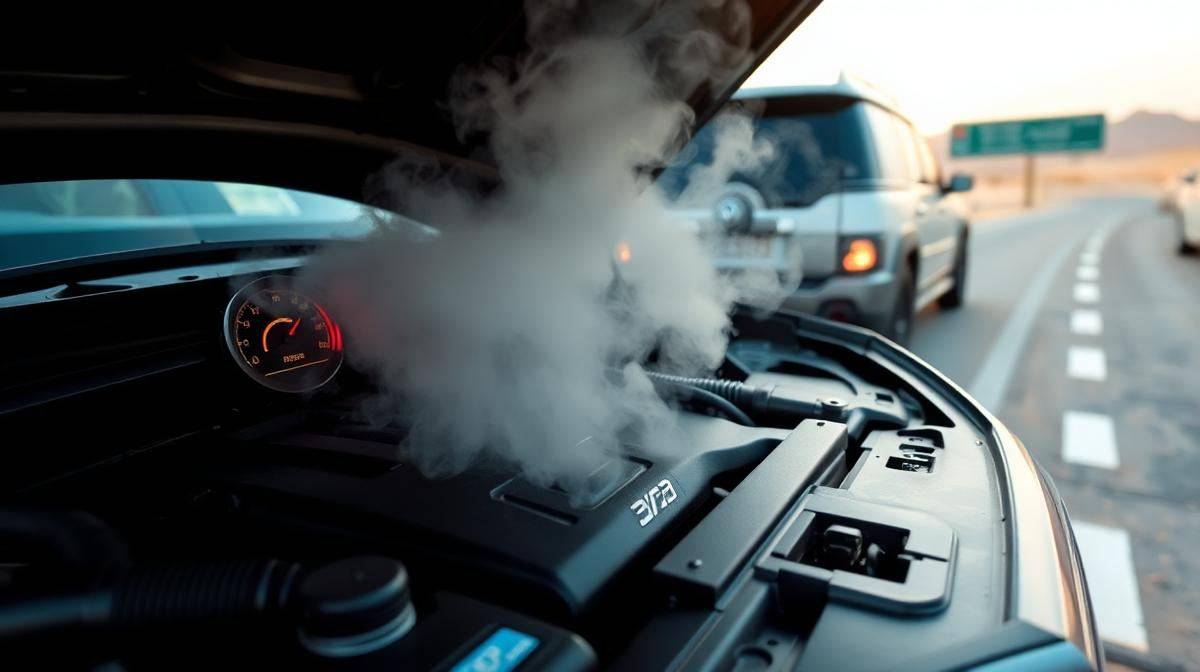
Your engine runs at roughly 90-105°C internally. When the air outside is 50°C, the radiator has far less temperature differential to dissipate heat. Add stop-start traffic on Al Khail Road and your cooling system is pushed to its absolute limit.
• Symptoms: Temperature gauge climbing, coolant warning light, steam from bonnet, sweet smell
• Prevention: Flush coolant every 2 years, check hoses and thermostat annually
Critical Warning
If your temperature gauge goes into the red, pull over immediately and turn off the engine. Driving even 2 minutes with an overheating engine can warp the cylinder head, turning a AED 300 coolant repair into an AED 8,000-15,000 engine rebuild.
4Tyre Pressure & Blowouts
Road surface temperatures in Dubai can reach 70-80°C in peak summer. This superheats the air inside your tyres, increasing pressure by 5-10 PSI beyond what you set in the morning. Over-inflated tyres on scorching asphalt, especially tyres with worn tread or existing damage, are a blowout waiting to happen.
• Check frequency: Weekly in summer, always when tyres are cold (early morning)
• Minimum tread: 3mm (UAE legal minimum is 1.6mm, but 3mm is the safe threshold for summer)
• Cost: Pressure check is free; new tyres AED 400-2,000+ each depending on size and brand
5Paint & Interior Damage
UV radiation in Dubai is relentless. Without protection, your car's clear coat oxidises, paint fades unevenly, and plastic trim becomes brittle and chalky. Inside, leather cracks and dashboard materials warp under sustained 80°C cabin temperatures.
• Interior: Reflective sunshade, leather conditioner every 3 months, park in shade
• Cost: Ceramic coating AED 1,500-4,000; sunshade AED 30-80 (best ROI in car care)
6Belt & Hose Deterioration
Rubber does not like heat. The serpentine belt driving your alternator, AC compressor, and power steering pump degrades faster in extreme temperatures. Coolant hoses soften, expand, and develop weak points. A snapped belt or burst hose at highway speed is dangerous and always happens at the worst possible moment.
• Inspection: Visual check every 6 months; replace belts every 60,000-80,000 km
• Cost: Serpentine belt AED 200-600; coolant hose AED 150-500 per hose
7Transmission Overheating
Automatic transmissions generate significant heat, more so in stop-start Dubai traffic during summer. Transmission fluid breaks down faster at high temperatures, losing its lubricating and cooling properties. This is particularly critical for luxury SUVs like Range Rovers with complex ZF 8-speed units.
• Symptoms: Rough shifting, delayed engagement, transmission temperature warning
• Prevention: Transmission fluid change every 60,000 km (despite "lifetime fill" claims)
You can use this as a checklist. Check every item before May, or have a professional workshop perform the inspection.
Your 10-Point Summer Readiness Check
AC system performance test: does it cool within 2 minutes of starting?
Coolant level and condition: should be clean, not rusty or milky
Battery voltage and conductance test: replace if below 12.4V resting
Tyre tread depth (minimum 3mm) and even wear pattern
All belts for cracks, glazing, or fraying, as heat accelerates deterioration
Radiator hoses for soft spots, bulges, or seeping
Windshield washer fluid: use a summer formula that will not evaporate instantly
Engine oil level and condition: synthetic oil handles heat better
Brake fluid moisture content, which absorbs water over time and reduces the boiling point
Interior protection: sunshade, window tints, and leather conditioner
What You Can Do Yourself vs What Needs a Professional
DIY (No Tools Needed)
Check tyre pressure weekly (petrol station gauge)
Top up windshield washer fluid
Use reflective sunshade every time you park
Condition leather seats quarterly
Check coolant level (when cold, never open hot)
Park in shade whenever possible
Professional Service Required
AC gas recharge and leak detection
Battery conductance testing
Coolant system flush and refill
Belt tension and condition assessment
Transmission fluid change
Full diagnostic scan (European vehicles)
Month-by-Month Summer Care Calendar
Timing matters. Here is when to do what so you are never caught by surprise:
March–April: Preparation Window
Book summer prep service (before workshop backlogs)
AC performance test and recharge if needed
Battery conductance test, replacing proactively if weak
Coolant flush if due (every 2 years)
Tyre inspection and rotation
May: Heat Begins
Verify AC is cooling effectively under load
Check tyre pressures (adjust for heat expansion)
Apply ceramic coating or wax for UV protection
Install sunshade if not already using one
Top up all fluids
June–August: Peak Summer (Survival Mode)
Weekly tyre pressure checks (morning only)
Monitor temperature gauge during every drive
Keep coolant and washer fluid topped up
Do not skip scheduled oil changes, as heat degrades oil faster
Watch for dashboard warning lights and act immediately
September–October: Recovery & Assessment
Post-summer inspection to assess wear
AC deodorising treatment (mould builds up in humid months)
Battery re-test after summer stress
Brake inspection (heat affects brake fluid)
Consider any deferred maintenance now before winter
Dubai Heat Impact Scale: What Happens at Each Temperature
Temperature
What's Happening to Your Car
Risk Level
35-40°C
AC working hard, battery under moderate stress
Moderate
40-45°C
Coolant system tested, tyre pressure rising, interior scorching
High
45-50°C
Battery near failure threshold, belts/hoses critical, blowout risk peaks
Severe
50°C+
All systems are maxed out, so any weakness will be the first to fail.
Extreme
The Bottom Line
Dubai summer is predictable. The heat comes every year, does the same damage, and catches the same unprepared drivers. The difference between a trouble-free summer and one filled with breakdowns often comes down to a pre-season inspection.
✓ Prepare in March-April before workshops are swamped
✓ AC, battery, and coolant are the three critical systems
✓ Check tyres weekly throughout summer
✓ Never ignore warning lights, as a minor issue can become a major repair if you continue driving.
✓ Post-summer inspection in October catches damage before it compounds
Dubai temperatures above 50°C cause accelerated battery degradation (lifespan drops 30-50%), AC compressor strain, coolant evaporation, tyre pressure fluctuations risking blowouts, rubber hose/belt deterioration, and paint oxidation from UV exposure. Regular summer maintenance prevents these issues.
How often should I service my car in Dubai summer?
During summer (May-September), it is advisable to service a car every 5,000 km or 3 months, whichever comes first. Check coolant and AC monthly, monitor tyre pressure weekly, and test your battery before the season starts. European vehicles may need more frequent attention due to tighter tolerances.
Why does my car battery die faster in Dubai?
Extreme heat accelerates chemical reactions inside your battery, causing faster fluid evaporation and internal corrosion. A battery that lasts 4-5 years in mild climates may only last 2-3 years in Dubai. Pre-summer battery testing with a conductance tester can predict failures before they strand you.
What temperature is too hot to drive in Dubai?
Your car can handle any Dubai temperature if properly maintained. The danger is not the ambient temperature; it is deferred maintenance. Ensure your cooling system, AC, tyres, and battery are summer-ready. If your temperature gauge rises above normal while driving, pull over immediately and call for assistance.
How much does summer car preparation cost in Dubai?
A comprehensive summer prep service costs AED 450-850 depending on your vehicle. This includes AC inspection and recharge, coolant flush, battery test, tyre check, belt/hose inspection, and fluid top-ups. Individual services: AC recharge AED 150-350, coolant flush AED 200-400, battery replacement AED 300-800.
Can Dubai heat cause my tyres to explode?
Yes. Asphalt temperatures reach 70-80°C in summer, causing tyre pressure to increase by 5-10 PSI. Over-inflated or worn tyres on superheated roads significantly increase blowout risk. Check tyre pressure weekly in summer, always when cold (in the morning). Replace tyres with less than 3mm tread depth before summer.
Why is my car AC not cooling enough in Dubai summer?
Common causes include low refrigerant (leaks develop over time), a clogged cabin filter restricting airflow, a worn compressor unable to handle peak demand, or a dirty condenser reducing heat dissipation. Professional AC service with leak detection, gas recharge, and system inspection typically resolves the issue for AED 150-350.
Should I use a sunshade or car cover in Dubai?
Absolutely. Interior temperatures can reach 80°C without protection. Use a reflective windshield sunshade (reduces interior temps by 15-20°C), park in shade when possible, and consider window tinting if not already applied. Car covers protect paint from UV but ensure breathable material to prevent moisture trapping.
What coolant should I use for Dubai summer?
Use the coolant type specified by your manufacturer and never mix types. European vehicles typically require OAT or HOAT coolant (e.g., G13 for VW/Audi, MB 325.6 for Mercedes). The coolant-to-water ratio should be 50:50 for optimal protection up to 129°C. Have it professionally flushed every 2 years or 40,000 km.