
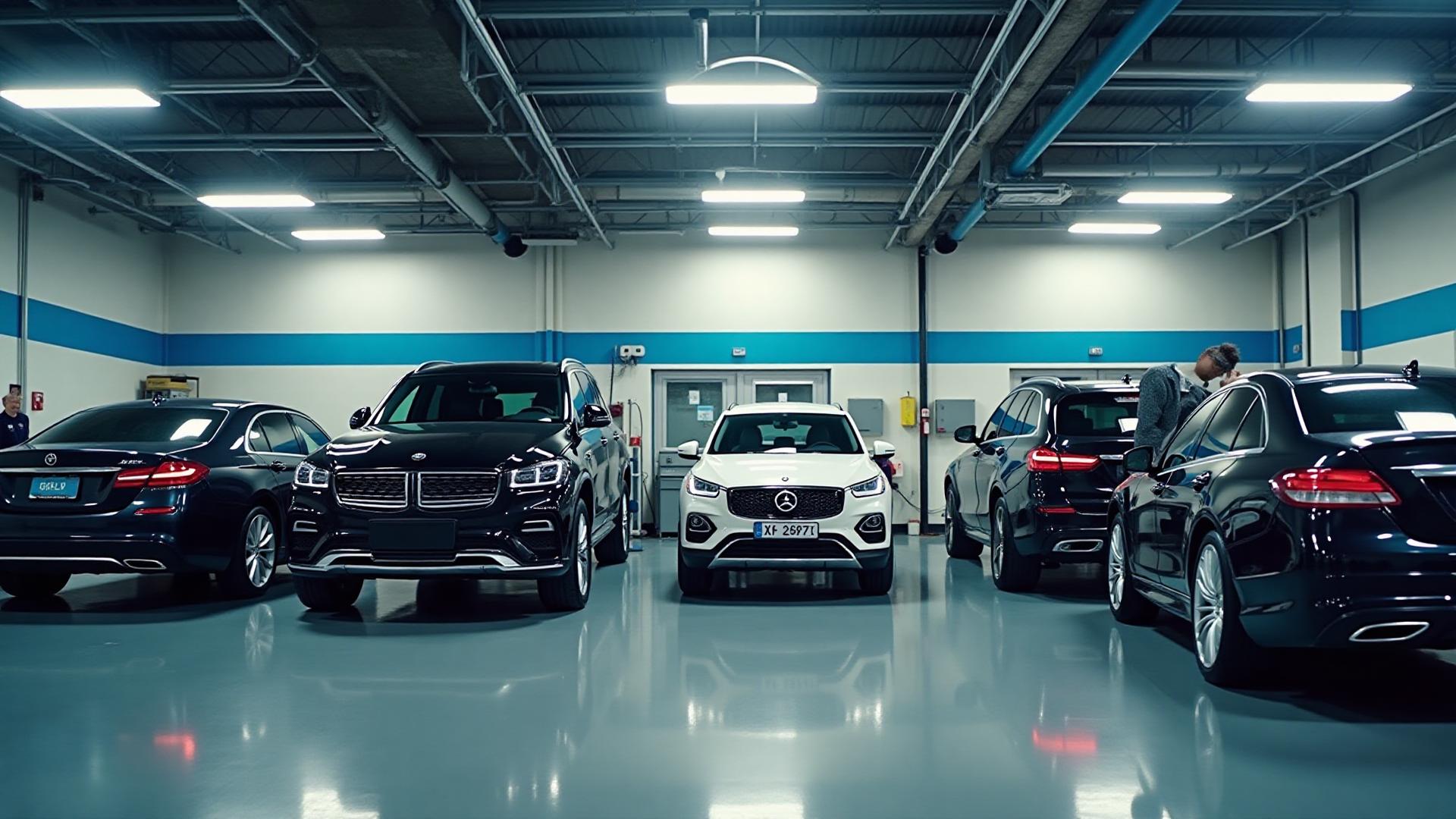
Brake Pad Replacement Dubai 2026: Cost, When to Change & OEM vs Aftermarket
Brake pad replacement in Dubai costs AED 250-1,500 per axle depending on your vehicle and whether you choose OEM or quality aftermarket pads. It's the single most common brake repair we perform — and the question every customer asks is the same: "Should I go OEM or aftermarket?" This guide answers that definitively, with real pricing from our workshop for every major car brand on Dubai roads.
In my 12 years working on European luxury vehicles in Dubai, I've seen what happens when drivers fit the wrong brake pads. A customer brought in a Porsche Cayenne with budget aftermarket pads that had glazed within 8,000 km — the stopping distance had nearly doubled, and the discs were scored beyond saving. That AED 300 saving on pads turned into a AED 6,000 disc and pad replacement. The right pads on the right car aren't optional — they're safety-critical.
Brake Pad Replacement in Dubai: Key Numbers
How Much Does Brake Pad Replacement Cost in Dubai?
Brake pad replacement cost depends on three things: your vehicle type, the quality of pads you choose, and whether you go to a dealer or independent specialist. Here's what you should expect at a quality independent workshop like BRITFIX. These prices are per axle (front or rear) and include labour, parts, and inspection:
Brake Pad Pricing by Vehicle Category
| Service | Price (AED) |
|---|---|
Economy Cars (Toyota, Nissan, Hyundai, Kia)
| AED 250-500 |
Mid-Range (Honda, Mazda, VW, Dodge)
| AED 400-800 |
European Luxury (BMW, Mercedes, Audi)
| AED 600-1,200 |
Performance & Heavy SUV (AMG, M-Sport, Range Rover, Porsche)
| AED 800-1,500 |
Dealer vs Independent: You're Paying for the Badge
A BMW dealer charges AED 1,200-1,800 for front brake pads that cost AED 535-715 at an independent specialist using genuine BMW parts. The same Textar or ATE pads that BMW sources from these suppliers are available to independent workshops at wholesale prices. Your warranty remains valid — UAE consumer protection law guarantees your right to service at any qualified workshop.
OEM vs Aftermarket Brake Pads — Which Should You Choose?
This is the #1 question our customers ask — and the answer depends entirely on your vehicle. "Will brake pads be OEM or aftermarket please?" is something we hear daily, and it's the right question to ask. Here's the definitive breakdown:
| Factor | Genuine OEM | OEM-Equivalent (Brembo, Textar, TRW) | Budget Aftermarket |
|---|---|---|---|
| Quality | Identical to factory | Same manufacturer, different box | Variable — often unknown compound |
| Price | AED 400-1,400 | AED 150-600 | AED 80-200 |
| Dubai Heat Performance | Excellent | Excellent | Poor — glazing risk |
| Lifespan in Dubai | 40,000-60,000 km | 35,000-55,000 km | 15,000-25,000 km |
| Recommended For | Porsche, AMG, ceramic brakes | BMW, Mercedes, Range Rover, Audi | Not recommended for Dubai |
The OEM-Equivalent Secret
Here's what most drivers don't know: Textar makes the brake pads that go in the BMW box. TRW makes the pads in the Mercedes box. Brembo makes Porsche's pads. When you buy "genuine" dealer pads, you're paying 40-60% extra for the car manufacturer's packaging. OEM-equivalent pads from these same suppliers offer identical performance at a fraction of the cost. This is the sweet spot we recommend for most European vehicles.
When You Must Use Genuine OEM
Some vehicles require genuine OEM pads — no exceptions. Porsche vehicles with PCCB ceramic brakes need specific compounds that only Porsche supplies. AMG vehicles with compound brakes need Mercedes-specific formulations. And any vehicle with carbon-ceramic discs requires matched pad compounds. Using the wrong pads on these systems causes rapid disc damage costing AED 10,000-30,000+.
When Do Brake Pads Need Replacing? 6 Warning Signs
Don't wait for your brakes to fail. These six signs tell you it's time for new pads. In Dubai's traffic, reliable brakes aren't optional — they're the difference between a safe stop and a collision. If you notice any of these, book a brake inspection immediately:
6 Signs Your Brake Pads Need Replacing
- High-pitched squealing or squeaking when you press the brake pedal — this is the built-in wear indicator
- Grinding or harsh scraping sound — pads are completely worn, metal backing plate is contacting the disc
- Brake pedal vibrates or pulsates when stopping — usually indicates warped discs alongside worn pads
- Vehicle pulls to one side during braking — uneven pad wear or stuck caliper
- Brake warning light illuminated on dashboard — electronic wear sensor has triggered
- Noticeably longer stopping distances than usual — pad material is too thin to generate proper friction
Dubai-Specific: Sand Contamination
Desert sand and fine dust particles infiltrate your braking system and act as an abrasive compound between pads and discs. This is unique to Gulf climates and accelerates wear beyond what manufacturer intervals account for. If you regularly drive on unpaved roads, desert tracks, or park outdoors, inspect your brakes every 15,000 km instead of 20,000 km.
Brake Pads vs Brake Discs — Do You Need Both?
Not every brake job requires new discs. Brake discs (rotors) are designed to outlast 2-3 sets of pads, typically lasting 60,000-100,000 km. However, they must be replaced when they reach minimum thickness, are warped, or are deeply scored. Here's how we decide:
| Condition | Pads Only | Pads + Discs | Pads + Disc Polish |
|---|---|---|---|
| Discs above minimum thickness | ✓ | — | — |
| Discs below minimum thickness | — | ✓ | — |
| Pedal vibration / warped discs | — | ✓ | — |
| Light surface scoring | — | — | ✓ |
| Deep grooves or lip on edge | — | ✓ | — |
Disc resurfacing (polishing) is a cost-effective option when discs have light surface scoring but are still above minimum thickness. This removes the top layer of uneven wear and gives new pads a fresh, flat surface to bed into. It typically costs AED 150-300 per pair and can extend disc life by another full pad cycle. Learn more about brake disc services.
Brake Pad Replacement Cost by Car Brand in Dubai
These prices are based on real quotes from our workshop and suppliers — not estimates. They represent what you should actually expect to pay at a quality independent specialist in Dubai:
Real Workshop Pricing by Vehicle
| Service | Price (AED) |
|---|---|
Range Rover Sport / Velar — Front Pads
| AED 450-650 |
Range Rover Sport / Velar — Rear Pads
| AED 350-550 |
BMW X5 / X3 — Front Pads (OEM)
| AED 535-715 |
BMW X5 / X3 — Front Pads (Quality Aftermarket)
| AED 250-350 |
Porsche Cayenne — Front Pads + Sensors
| AED 800-1,400 |
Mercedes C-Class / E-Class — Front Pads
| AED 400-650 |
Dodge Challenger — Front Pads + Disc Polish
| AED 500-800 |
Notice the BMW example: genuine BMW-branded front pads cost AED 535-715, while Textar pads (the actual manufacturer BMW sources from) cost AED 250-350. Same pad, same performance, same lifespan — 50% less. This is why knowing your options matters. For a comprehensive view of all repair costs, see our car repair cost guide.
What Happens During a Professional Brake Pad Replacement
A proper brake pad replacement isn't just swapping parts — it's a systematic process that ensures your entire braking system is safe. Here's exactly what happens when you bring your car to BRITFIX for brake pads:
The BRITFIX 10-Step Brake Service Process
- 1Vehicle raised on lift — full visual inspection of all four brake assemblies
- 2Wheel removed — brake pads, discs, callipers, and hoses inspected for wear and damage
- 3Brake disc thickness measured with digital micrometer — compared to manufacturer minimum specification
- 4Calliper pins checked and lubricated — seized pins cause uneven pad wear and premature failure
- 5Old pads removed — wear pattern examined to identify any underlying issues (caliper, slider, or hydraulic)
- 6Calliper piston compressed using correct tool — never using a C-clamp which can damage the seal
- 7New OEM-spec pads installed with anti-squeal shims and backing plates
- 8Brake wear sensor replaced (European vehicles) — single-use sensors must be changed with every pad change
- 9Wheel refitted and torqued to manufacturer specification — not guessed with an impact gun
- 10Brake pedal pumped to restore pressure — then road test with gradual bedding-in procedure
Why Bedding-In Matters
New brake pads need a bedding-in procedure — a series of gradual stops from moderate speed to transfer an even layer of pad material onto the disc surface. Without proper bedding-in, you'll get uneven deposits causing vibration and reduced stopping power. We perform this road test before returning every vehicle. Many quick-service shops skip this step entirely.
Common Brake Repair Mistakes to Avoid
Skipping Brake Wear Sensor Replacement
European vehicles use electronic wear sensors that are single-use. Once the pad wears down and triggers the sensor, the wire is physically damaged and cannot reset. If your workshop doesn't replace the sensor with new pads, your dashboard warning system won't alert you when the new pads eventually wear down. Sensors cost AED 50-150 — a tiny investment for your safety warning system.
Using Budget Pads on European Cars
Budget brake pads use inferior friction compounds that can't handle the heat generated by heavier European vehicles in Dubai traffic. The result: brake fade (loss of stopping power when hot), glazing (pads become smooth and ineffective), and accelerated disc wear. We've seen budget pads destroy AED 3,000+ worth of brake discs within 10,000 km. The AED 200 saving isn't worth it.
Ignoring Disc Condition
New pads on worn discs is money wasted. If your discs are scored, warped, or below minimum thickness, the new pads won't make proper contact across the full surface. This causes uneven wear, noise, vibration, and reduced braking performance. Any quality workshop should measure disc thickness as standard practice on every brake job — if they don't, find a different workshop.
Frequently Asked Questions
How much does brake pad replacement cost in Dubai?
Brake pad replacement in Dubai costs AED 250-1,500 per axle depending on your vehicle. Economy cars (Toyota, Nissan) cost AED 250-500. Mid-range vehicles cost AED 400-800. European luxury vehicles (BMW, Mercedes, Range Rover) cost AED 600-1,500 with OEM pads. Independent specialists typically charge 30-50% less than dealerships for identical quality parts.
How long do brake pads last in Dubai?
Brake pads last 30,000-60,000 km in Dubai — shorter than the 50,000-80,000 km you'd get in cooler climates. Dubai's stop-start traffic, extreme heat, and sand contamination accelerate brake wear by 25-40%. Rear pads typically last longer than fronts since front brakes handle 60-70% of stopping force. Check pads every 20,000 km or annually.
Should I use OEM or aftermarket brake pads?
For European luxury vehicles (BMW, Mercedes, Porsche, Range Rover), we strongly recommend OEM or OEM-equivalent pads (Brembo, Textar, TRW, ATE). These are engineered for your vehicle's specific braking system and heat dissipation requirements. Quality aftermarket pads from reputable brands are safe for Japanese and Korean vehicles. Never use budget unbranded pads on any vehicle.
Do I need to replace brake discs with brake pads?
Not always. Brake discs typically last 2-3 sets of pads (60,000-100,000 km). However, if discs are below minimum thickness, warped (causing vibration), or deeply scored, they must be replaced with the pads. Installing new pads on worn discs wastes the new pads and compromises braking performance. We measure disc thickness on every brake job.
How long does brake pad replacement take?
Brake pad replacement takes 1-2 hours per axle at a professional workshop. If brake discs and sensors also need replacing, allow 2-3 hours. At BRITFIX, we include a road test and bedding-in procedure to ensure optimal brake performance before returning your vehicle.
What are signs I need new brake pads?
Six key warning signs: (1) High-pitched squealing when braking — the wear indicator is touching the disc. (2) Grinding or scraping noise — pads are completely worn, metal-on-metal contact is damaging discs. (3) Brake pedal vibration or pulsation. (4) Car pulls to one side when braking. (5) Brake warning light on dashboard. (6) Longer stopping distances than usual.
Can I drive with worn brake pads?
Driving with severely worn brake pads is extremely dangerous and can cause catastrophic damage. Once pads wear past the minimum thickness (typically 2-3mm), you risk: metal-on-metal contact destroying your brake discs (AED 1,000-4,000 to replace), caliper damage (AED 2,000-6,000), and most critically, brake failure. If you hear grinding, stop driving and get your brakes inspected immediately.
Why do brake pads wear faster in Dubai?
Three factors accelerate brake wear in Dubai: (1) Extreme heat — brake fluid and pad compounds operate at higher ambient temperatures, reducing their effective operating range. (2) Stop-start traffic — Dubai's congested roads mean constant braking, especially on Sheikh Zayed Road and Al Khail Road. (3) Sand and dust contamination — fine desert particles act as abrasives between pads and discs.
What brake pads do you recommend for Range Rover in Dubai?
For Range Rover models (Sport, Velar, Evoque, Defender), we recommend genuine Land Rover OEM pads or Textar/TRW OEM-equivalent pads. These are specifically formulated for the vehicle's weight (2,000-2,500 kg) and braking system. Aftermarket pads often can't handle the heat generated by heavy luxury SUVs in Dubai traffic. Front pads typically cost AED 350-600, rear AED 300-500.
Do brake pad sensors need replacing?
Yes. European vehicles (BMW, Mercedes, Range Rover, Porsche) use electronic brake wear sensors that are single-use — once triggered, they must be replaced with the pads. Sensors cost AED 50-150 each and are essential for your dashboard brake warning system to function correctly. Skipping sensor replacement means you won't get a warning when the new pads eventually wear down.
Related Services & Guides
Brake health is just one part of keeping your car safe on Dubai roads. Here are related services and guides that complement your brake maintenance:
- Brake Pad Replacement Service — Book your brake pad replacement online
- Brake Disc Replacement & Resurfacing — When discs need attention alongside pads
- Major Service — Comprehensive service including full brake inspection
- Oil Change Dubai 2026 Guide — Keep your engine as well-maintained as your brakes
- Car Repair Cost Dubai 2025 — Full pricing guide for 50+ services
- Summer Car Care Guide — Heat affects brakes too — comprehensive summer protection
- Gearbox Repair Dubai 2026 Guide — Transmission problems often surface after brake and suspension work — costs, warning signs and ZF specialist options
Book Your Brake Inspection Today
Don't gamble with your brakes. Our certified technicians will inspect your brake system, measure disc thickness, and give you an honest assessment — no unnecessary upselling. Free pickup and delivery across Dubai.
Related Articles
Best Car Garage Near Me in Dubai 2026: Independent Ranking, Pricing & Free Pickup
The definitive 2026 guide to finding the best car garage near you in Dubai. Independent ranking, real dealer-vs-specialist price comparison, 10-point trust checklist, and free pickup across 30+ Dubai communities — all backed by 312+ verified Google reviews.
Full Car Service Dubai 2026: Cost, What's Included & How to Save 50%
Complete 2026 guide to full car service in Dubai with transparent pricing for every vehicle type, a 25-point service checklist, dealer vs independent garage comparison showing 30-50% savings, Dubai-specific service intervals, and free pickup & delivery.
Car Engine Overheating in Dubai: Causes, Repair Cost & Prevention Guide 2026
Complete guide to car engine overheating in Dubai with 2026 repair pricing, the 7 most common causes ranked by frequency, vehicle-specific cooling system failures for Range Rover, BMW X5, Nissan Patrol and Mercedes, a step-by-step emergency response guide, and a 10-point prevention checklist for Dubai summers.